David beckham's wife Victoria posts picture and Twitters that a UFO hovered over her Los Angeles home

David beckham's wife Victoria posts picture and Twitters that a UFO hovered over her Los Angeles home ....

Federal authorities to shut off all TV and radio communications simultaneously 11/9/11 at 2PM ET

If you have ever wondered about the government’s ability to control the civilian airwaves, you will have your answer on November 9th.

The Coming Derivatives Crisis That Could Destroy The Entire Global Financial System

Most people have no idea that Wall Street has become a gigantic financial casino.

5 to 6 Thousand Dead Birds wash ashore at Wasaga Beach, Canada

Thousands of dead birds have flooded the shores of Georgian Bay in a scene that locals compared to the devastation from an oil spill.

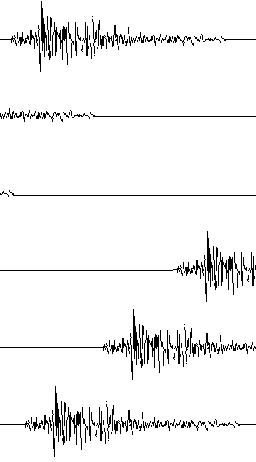
UFO over Sioux Falls? Experts think it was a meteor

Amie Neustrom doesn't have a good explanation for what she saw in the night sky near her Renner home early Wednesday.

RT AMERICA

Showing posts with label POLITICS. Show all posts

Tuesday, November 29, 2011

‘Greece & EU: Either saved or collapsed together’


Greek MP Simos Kedikoglou predicts his country's economic collapse within weeks, even days, if it doesn’t receive another tranche that finance ministers of eurozone countries have agreed to release.

­But the fall of Athens will have a domino effect – tugging away the rest of Europe.

The Greek politician has sharply criticized the recent country’s government and the newly appointed prime minister for bowing entirely the Brussels’ will and passing laws which are required solely by the European leaders.

“Greece does not feel to be rightfully represented by this parliament because they feel they were tricked in the last elections,” Kedikoglou told RT. “The socialists were saying ‘we have money, we will give you money’ and they ended up by taking the money of the people. Greeks need to feel rightfully represented by their parliament and we need a government that is supported by the Greek society. And that comes only with elections”.

Simon Kedikoglou acknowledges there is a fear for tomorrow in Athens.

“We don’t know what’s coming next,” he said. “Now everyone is realizing that it is not just a Greek problem, it is the European problem. The whole system that we have made up in the European Union is not working.”

“We had only monetary union without economic union, without political union. We need to move to a faster and bigger integration,” he added.

The MP says the government in Greece used to lie to its people about how the country’s development was progressing.

“It was the way of borrowing money and giving it away. It was done in the wrong way,” he claims. “We don’t produce as much as we did before and we don’t have the exports that we could have and we haven’t attracted the investments that we must attract. So we must change the whole structure of our economy very quickly and completely.”

“We didn’t speak the truth to the people over the past years. We know the problem is we didn’t do what had to be done quickly and radically. We tried to do the changes slowly and without shocking the society. It proved to be too slowly and too late,” he stated.

“Now we have to speak the truth that in the last 20 years, Greece has been importing more than it’s been exporting. We don’t produce. Greece doesn’t produce the wheat, the meat that Greeks need. It is the first time since World War II Greece can’t feed its own people. In a country like Greece, where everything can grow, I think it’s a crime.”

But at the same time Simos Kedikoglou argues austerity cannot save his country.

“If you raise the taxes in an economy which is in recession then the results are catastrophic. We need a policy which encourages development. If we go where we are going, I think the collapse is certain".

“And that’s going to be Greek tragedy. And not just Greek tragedy,” he predicts. “It will have a domino effect and the whole Europe will be affected. You can’t sacrifice Greece just to save eurozone. Eurozone will either be saved all together or collapsed all together.”

Bomb voyage: 600 Libyans ‘already fighting in Syria’

Libyan National Transitional Council fighters (AFP Photo / JOSEPH EID)

The Libyan government apparently wants to share its successful experience of overthrowing the Gaddafi regime with like-minded Syrians. It has sent 600 of its troops to support local militants against the Assad regime, according to media reports.

The fighters have joined the Free Syria Army, the militant group carrying out attacks on government forces in Syria, reports the Egyptian news website Al-Ray Al-Arabi citing its sources. The report says the troops entered Syria through Turkish territory.

The alleged incursion happened with the consent of the chairman of the Libyan National Transitional Council (NTC) Mustafa Abdul Jalil. The NTC allegedly welcomed volunteers to join the surge.

Last Friday British media reported a secret meeting between NTC envoys and Syrian rebels had been held in Istanbul. The Libyan governing body reportedly pledged to supply arms, money and fighters to the Syrians.

Bashar Assad’s government has repeatedly accused foreign forces of smuggling armed groups and weapons into Syria and thus fueling the ongoing violence.

In mid-October the Libyan NTC was the first government to recognize the rebel Syrian National Council as the legitimate representatives of the Syrian people.

The Libyan population is in possession of many weapons, which they received during the civil war by plundering military depots, through smuggling or as aid from NATO members and countries like Qatar, which took part in the ousting of Muammar Gaddafi. The NTC has difficulties in disarming the ex-rebels, who want to keep their firearms, either for personal protection or as means to make their living.

In November, the Libyan capital, Tripoli, saw a mass protest by the rebels, who demanded that the NTC pay their wages. Some even threatened to overthrow the new government the way they did with the previous one, unless their demands are met.

Funneling armed, underemployed and eager-to-fight youngsters to another country could be a convenient move for the NTC. The Syrian government, however, is likely to see them as mercenaries, which NATO member Turkey allowed into their country as an alternative to a full-scale military campaign, which is impossible without the sanction of the United Nations Security Council.

Thursday, November 17, 2011

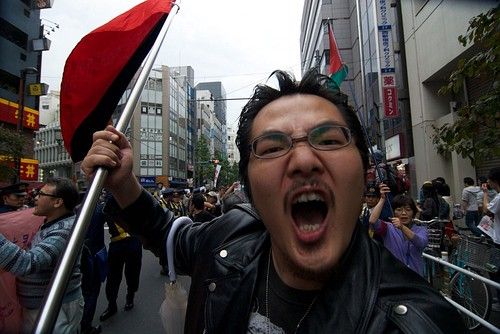
Occupy Tokyo: Mass demonstrations go unreported by Japanese media

You've heard about the Occupy Wall Street protests in New York, Los Angeles, London, Toronto, Berlin, Tel Aviv and elsewhere around the world. But did you know that huge demonstrations have been taking place in Tokyo as well? We certainly didn't until a SOTT forum member sent us the details. The general lack of awareness of the protests in Japan is probably due to the fact that there has been zero coverage of 'Occupy Tokyo' - which has grown out of the country's large (and growing) grassroots anti-nuclear movement - in Japan's mainstream media.

Several large demonstrations have taken place all over Japan in recent months, especially in Tokyo. The general mood is the same as elsewhere: ordinary people in Japan are fed up with their leaders' lies, particularly the lies told by TEPCO, the Tokyo Electric Power Company, and how the government has handled the Fukushima disaster. Or rather, how it has avoided handling it. This should all be eerily familiar to Americans of course; BP's lies and the US government's enabling role from the moment the Deepwater Horizon rig exploded in April 2010 has continued to this day, with the tragedy continuing to unfold in deathly silence. What is happening in Japan is almost a carbon copy; denial, smear campaigns, heavy-handed tactics and, of course, total media blackout. Up to one million people may have died as a result of Chernobyl, although we'll never really know the true death toll. Fukushima is many orders of magnitude worse...

People in Japan are very angry. Even though the Fukushima disaster is nowhere near ending (in fact, it is getting worse), Japanese media are simply not covering the fallout of the worst nuclear accident in history. Aftershocks from the Magnitude 9 earthquake which struck off the coast of Japan on March 11th are hardly mentioned in the Japanese media, but the fact is they are still ongoing and people are constantly stressed out by them. The economic aftershock is also beginning to take hold in a big way. The good news, says the SOTT forum member in Japan, is that people are now starting to wake up the fact that the Japanese government, TEPCO, and the media have been lying all this time and that more people are starting to take action to actually deal with the situation rather than wishfully think it will just blow away out into the Pacific Ocean.

Like citizens in other 'democratic' countries, Japanese people have had a crash course this year in learning that their own media is as controlled, if not more so, than those 'less democratic countries' everyone loves to point fingers at. To paraphrase Japanese independent journalist, Mr Uesugi, "In Japan, control of the media is worse than in China and similar to Egypt." An outrageous example of this information blackout was a recent demonstration by over 60,000 people in Tokyo which was never mentioned by the Japanese mainstream news at all. On top of protests focused on the Japanese government's handling of the Fukushima disaster, an 'Occupy Tokyo' movement is gaining momentum as well. Nobody is receiving much information about this either, unless they check out alternative websites. What follows is an overview of some of the events that have taken place in Japan, Tokyo in particular, in the past three months.

Many of the following articles are in Japanese, but we hope to get the important ones translated into English and published on SOTT shortly.
  • September 2nd: Yoshihiko Noda becomes the new prime minister of Japan and promises to phase out the country's reliance on nuclear power.

  • September 5th: Typhoon Talas leaves 29 dead and 56 missing as "the worst storm in memory" leaves thousands homeless.

  • September 10th: The night before the 10th anniversary of 9/11, the Shinjyuku ward of Tokyo, one of the city's major business and administrative centers, is sealed off, allegedly due to "maintenance". BS! The government was anticipating a mass demonstration which it thwarted by effectively banning anyone from showing up.

  • September 11th: People gather to form a human chain by holding hands and enclosing the headquarters of the Ministry of Economy, Trade and Industry in Tokyo. Also that day, supporters of the Japanese peace and neutrality NGO, 'Article 9 Association', begin pitching tents around the Ministry of Economy, Trade and Industry. Among the protesters were four young activists who began a 10 day hunger strike to draw attention to the Japanese government's plans to build more nuclear power stations!
    occupy japan
    © unknown
  • September 19th: 40,000 people attended a 'Get-rid-of-nuclear-power' meeting in Meiji Park, Tokyo. "We cannot help it, so we came"
    occupy japan
    © Tanaka
    occupy japan
    © unkown
  • September 21st: The four activists finish their hunger strike.

  • September 25th: In New York, Fukushima mothers shouted: "UN has to stop nuclear power"

    A delegation of Japanese women from the Fukushima prefecture protested in front of the United Nations building in New York City while Prime Minister Noda attended a UN summit on nuclear safety. As Noda and UN Secretary-General Ban Ki-moon shook hands outside the building in front of the press, an organic farmer from Fukushima prefecture, Ms Sachiko Sato, stood in the background and shouted into a megaphone, "You can't even protect the children of Fukushima, how dare you talk about nuclear power safety?" Sato and other volunteers later formed the 'Fukushima 100', a number which has rapidly grown into thousands, organising sit-ins at government offices in Tokyo to demand greater protection for children affected by radiation.

    Aileen Mioko Smith, part of Green Action Japan, and Sachiko Sato attending a protest calling for the closure of nuclear plants in the US.
    occupy japan
    © Tanaka
  • September 29th: 'Occupy the Ministry of Economy' - 720 people initially attended this protest, which soon became a mecca for Japan's reinvigorated anti-nuclear movement. The following brave man from Hokkaido formally launched a lawsuit against TEPCO, in which he seeks to force the conglomerate to shut down nuclear power for good.
    occupy japan
    © Tanaka
  • September 30th: The Japanese government (specifically, the Ministry of Education, Culture, Sports, Science and Technology) announced the detection of plutonium in Iitate in Fukushima prefecture (45km away from the Daiichi nuclear plant).

  • October 10th: The Japanese government released the latest figures for airplane monitoring. The news was not good to say the least. Their solution? To offer '10,000 free trips for foreigners to visit Japan in 2012'. Eh, no thank you.
    occupy japan
    © Tanaka

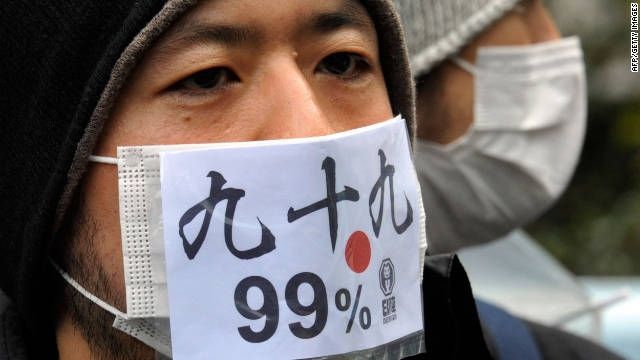
  • October 15th: Occupy Tokyo kicks off in earnest. "We are the 99%!"


  • October 22nd: Further mass demonstrations take place in Tokyo.


  • October 27th: 500 righteously angry women from around Japan occupy the Ministry of Economy for 10 days.
    occupy japan
    © Tanaka
  • October 29th: More protestors, this time desperate mothers from Fukushima, join demonstrations with the message that "TEPCO must apologise and make good for radiating our children!!"

  • October 31st: Fukushima Fallout: Scientist Marco Kaltofen Presents Data Confirming Hot Particles In Tokyo

    "To summarize the paper, citizens, some doctors and scientists, some bloggers and some farmers from around the world provided samples to Mr. Kaltofen who analyzed them for Fukushima radiation. An example of what he found is a slide that contains air filters from cars in Japan and in the United States. Cars in the United States hardly have any radiation in their air filters. Cars in Tokyo had quite a lot, way too much, in fact. Cars in Fukushima Prefecture were incredibly radioactive."
    In fact, levels of radiation in 'hotspots' in parts of Tokyo and Yokohama, 150km+ from Fukushima, have recently been found to exceed those of Fukushima prefecture. The 12-mile exclusion zone around the Daiichi nuclear plant is therefore totally redundant and a sham.

  • November 12th: "Occupy the Ministry of Economy". 40 police officers showed up at the campsite and began putting up signs saying "No entry". Police officers tried to persuade people to leave the premises, with one of them overheard saying, "I am going to keep coming to you until you pack up your tent." The protester he was giving orders to replied, "I am going to stay here until they clean up nuclear power!"

Finally Someone Speaking the Truth !


#NigelFarage video below is must viewing. Nigel is quite the individual. To call him outspoken, well, lets just quote famous college basketball analyst Bill Raftery and say "Onion, double order !!"
Well done Nigel! Well done!

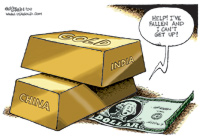
It’s All About Gold Now


By Greg Hunter’s USAWatchdog.com

At the beginning of this month, the G20 met in France to try to find a way to solve the European sovereign debt crisis. It ended with world leaders in disarray over a way to come up with a solution. At first blush, it appears that nothing of any importance came of the meeting of the 20 leading economies of the world, but that is not the case. It was widely reported the G20 came up with the idea that Germany might put up its gold reserves to back a bailout fund called the European Financial Stability Facility or EFSF. Of course, Germany, with its more than 3,400 tonnes of gold (number 2 in the world), quickly shot that idea down. End of story? Quite the contrary–the gold story is just beginning to get interesting.

You see, the G20 did something accidentally that was very important, and that was confirm that gold has a place in the monetary system, especially in times of extreme turmoil. Why doesn’t the EU use sovereign bonds to back the EFSF? They are considered a store of value and are held as reserves in many European banks. The simple answer is the world is waking up to the fact that debt can’t back up debt. Europe finds itself in a tough spot, and the leaders there know it. Reuters reported Monday, German Chancellor Angela Merkel said, “Europe is in one of its toughest, perhaps the toughest hour since World War Two,” she told her Christian Democrats, saying she feared Europe would fail if the euro failed and vowing to do anything to stop this from happening.” (Click here for the complete Reuters story.) Well, anything but put Germany’s gold up as collateral. Maybe Chancellor Merkel will be the next leader to exit the European stage? Who knows, but what I do know is that gold is once again going to become an important part of the world monetary system.

In a new book called “Currency Wars,” Wall Street insider Jim Rickards examines how countries try to get out of financial trouble by devaluing their currencies. Rickards says, “Today, as yesterday, countries are attempting to devalue their way out of trouble. Following the strategy of beggar-thy- neighbor, the U.S., Europe, China and Japan all want to weaken their currencies. The flaw in the tactic should be clear. “Not everyone could cheapen at once,” Rickards writes. “The circle still could not be squared.” (Click here to read a book review by Bloomberg.) Rickards predicts the U.S. dollar’s future is not bright, and if there were a “catastrophic collapse of investor confidence,” the dollar’s buying power could suffer suddenly and dramatically in a global sell off.

Gold would be the big beneficiary if the dollar declined, and Rickards’ top price for gold per ounce is–wait for it–$44,552! That price is the absolute highest possibility. Rickards and others predict that in the next few years, America will go back on some sort of gold standard. Meaning, the dollar will be backed by gold, but Rickards has stated on many occasions that there probably will not be a100% gold backed U.S. dollar. Instead, Rickards contends it will be more in the neighborhood of 40%. If that is the case, then gold would be $17,821 per ounce using Rickards numbers. It appears gold prices are going much higher.

The main factor in determining gold price is money printing, and one of the biggest currency creators on the planet is the Federal Reserve. It created enormous amounts of money in the wake of the 2008 meltdown, and it looks like it is getting ready to unleash mountains of even more cash to stop the impending Euro-land meltdown. This week, St. Louis Fed President James Bullard indicated the central bank would take action if the EU sovereign debt crisis turns chaotic. According to a Wall Street Journal report, “Bullard said that if overseas events worsened significantly, the Fed could respond, saying “the Fed can re-open some of the liquidity facilities that were used during 2008-2009″ to reduce related market disruptions. “It will be fairly clear if some sort of crisis occurs in financial market that causes trust to break down,” it would then be time for the Fed to take action to alleviate the market tumult, he said.” (Click here to read the complete WSJ report.) It looks to me the Fed will be forced to print money to stop another financial meltdown. It is only a matter of time, and time appears short.

Renowned economist Martin Armstrong says, “What this is really about is it’s the entire Western civilization that’s starting to crumble.” In an interview Monday on King World News, Armstrong warned, “Everything is falling apart and the politicians will not address it because it means having to change the system and that’s what they do not want to do. The real big money that I speak to, they are really starting to look beyond Italy, Greece, Spain and Portugal. They are starting to look at France and Germany.” (Click here for the complete KWN Armstrong interview.) Armstrong goes on to say, “They have borrowed year after year with no intention of paying it back. The US had $1 trillion of debt when Ronald Reagan took office in 1980. We are now pressing $15 trillion of debt.” The debt crisis throughout the Western world will push the price of the yellow metal higher even though it is currently range bound. Armstrong says, “Basically what you are doing is you are building a sideways type of base. Eventually gold is going to take off to the upside, but largely when people begin to see the Emperor has no clothes and we’re getting close to that. I would only give it a few more months.”

When the next financial calamity hits, the Fed and other central banks will have two choices. They can print money to try and save the system they love, or let it implode. That means this is really all about gold now.

Tuesday, November 15, 2011

Court allows OWS tents at Zuccotti despite Bloomberg ban

New York City Police face off with Occupy Wall Street protesters after police in riot gear removed protesters from Zuccotti Park early on November 15, 2011 in New York City (Spencer Platt / Getty Images / AFP)

The National Lawyers Guild says it has obtained a court order that allows Occupy Wall Street protesters to return with tents to New York’s Zuccotti Park. Earlier the activists’ encampment was ousted by the police force.

The guild says the injunction prevents the city from enforcing park rules on Occupy Wall Street protesters, reports AP.

Mayor Michael Bloomberg said he has not seen the court order yet. However, the city will go to court immediately, he added.

The mayor added that the city wanted to open the park for protesters once it is cleaned, but would not allow them use tents, sleeping bags or tarps.

DOJ Wants To Criminalize Uploading You Tube Videos


Racketeering charges for violating website’s terms of service

Paul Joseph Watson
Infowars

The Department of Justice is attempting to criminalize uploading videos that break You Tube’s terms of service, along with any other online action that is deemed to contravene a website’s usage policy, in a shocking expansion of cybersecurity laws deemed draconian by critics.
DOJ

“In a statement obtained by CNET that’s scheduled to be delivered tomorrow, the Justice Department argues that it must be able to prosecute violations of Web sites’ often-ignored, always-unintelligible “terms of service” policies,” writes Declan McCullagh.

Such violations would include creating a fake Facebook profile, lying about your weight on dating websites, or providing any other item of false information that violates a website’s TOS agreement.

Under the DOJ’s new legal framework, an expansion of the Computer Fraud and Abuse Act (CFAA), agreeing to a website’s terms of service would be identical to signing a contract with an employer, with similar punishments for breaking that contract.

“To the Justice Department, this means that a Web site’s terms of service define what’s “authorized” or not, and ignoring them can turn you into a felon,” writes McCullagh, pointing out that millions of Americans violate ‘terms of agreement’ policies every single day.

Indeed, in the case of You Tube, users are often informed months or even years later that they may have infringed on the company’s ‘terms of service’ agreement if another user merely complains about the content of their video.

Attorney Stewart Baker warns that under the newly amended law, users uploading a copyrighted You Tube video more than once would fit into “a pattern of racketeering,” with even harsher criminal penalties, “at least if Justice gets its way.”

A coalition of free speech organizations from across the political spectrum, including the ACLU, Americans for Tax Reform, the Electronic Frontier Foundation, and FreedomWorks have joined forces to oppose the move, savaging the proposed changes as an affront to Internet anonymity in a letter to the Senate.

“If a person assumes a fictitious identity at a party, there is no federal crime,” the letter states. “Yet if they assume that same identity on a social network that prohibits pseudonyms, there may again be a CFAA violation. This is a gross misuse of the law.”

As we have documented, the attempt to create a Communist Chinese-style system of Internet policing, advocated by Senator Joe Lieberman, mandates that Internet anonymity be outlawed and that a system even more draconian than what was rejected in China – individual ID’s for Internet users – be put in place.

The attempt to expand CFAA is just one tentacle of an all out war on Internet freedom that has been launched by the federal government. Another piece of legislation that has received bipartisan support, the so-called “Rogue websites bill,” would create a Chinese-style ban list where ISPs would be mandated to block certain websites by government decree.

Thursday, November 10, 2011

US: Emergency Alert System Fails

© Paul Keleher/Flickr

At 2 pm today the National Emergency Alert System is supposed be tested for the first time in its history on a federal level. As of 2:03 the system has yet to be activated.

Every TV and radio station in the nation is supposed to broadcast the test alert - sent from inside the White House - for 30 seconds.

The system was created in 1963 to allow the President to address the nation in the time of nuclear attack or other national crisis.

UPDATE: Brian Stelter tweets: At the NYT media desk, we heard the test via a radio, but we haven't seen it via cable television.

UPDATE 2: It's 2:07 and we still haven't seen the test on any cable network. We're calling the FCC, which oversees the system, for comment.

UPDATE 3 2:09pm: According to Twitter, the test displayed on CNBC and MSNBC in Washington. We still haven't seen anything in New York.

"We're still getting the results back now, and we'll put out a statement soon," a spokeswoman for the Federal Emergency Management Agency tells us.

The test was supposed to break into all radio and television - broadcast and cable - networks. Though it does not seem to have worked on New York City cable networks, among others.

UPDATE 4 2:20pm: We are waiting to hear back from the FCC and FEMA, though the test has clearly failed at its stated goal of reaching all Americans across all radio and television stations.

FEMA's tagline for the system test was "don't stress; it's only a test..." But maybe there is reason to fret.

UPDATE 5 2:46pm: FEMA is still processing the results, according to a spokesperson, and they do not yet have a handle on the scale of the failure.

They released this statement a few moments ago by Rachel Racusen, FEMA Spokeswoman:
"The nationwide test of the Emergency Alert System test was administered and the FCC and FEMA are currently collecting data about the results. This initial test was the first time we have tested the reach and scope of this technology and what additional improvements that should be made to the system as we move forward. Only through comprehensively testing, analyzing, and improving these technologies can we ensure an effective and reliable national emergency alert and warning system. We thank all of our partners who made this test possible and look forward to working with all our stakeholders to improve this current technology and build a robust, resilient, and fully accessible next generation alerting system that can provide timely and accurate alerts to the American people."
UPDATE 6 2:49pm: National Journal's Marc Ambinder tweets: FEMA official concedes "glitch"; says that it appears (maybe) to be related to how satellite and cable providers prepped their equipment.

UPDATE 7 2:59pm: Some DirectTV customers reported hearing Lady Gaga's "Paparazzi" play during the test. Some Comcast subscribers saw their cable boxes turn to QVC before the alert, while Time Warner Cable customers in New York did not see any alert at all.

UPDATE 8 4:05pm: Senate Homeland Security and Governmental Affairs Committee Chairman released this statement to Business Insider:
"The weaknesses exposed by today's test of the emergency alert system are unacceptable. Government and media carriers must work together to make sure the system does what it is intended to do, which is to transmit a nationwide message from the President in a crisis. I commend FEMA for carrying out this long-overdue, first-ever, nationwide test of the system. Without it, we would never have known the extent of the system's vulnerabilities."
UPDATE 9 4:06pm: In a blog post, FEMA says it will take "several weeks" to evaluate the test.

Here is the press release:
As part of our ongoing efforts to keep our country and communities safe during emergencies, we're working in partnership with the Federal Communications Commission (FCC) and the National Oceanic and Atmospheric Administration (NOAA) to conduct the first nationwide test of the Emergency Alert System (EAS). The EAS test plays a key role in ensuring the nation is prepared for any type of hazard, and that the U.S. public can receive critical and vital information should it ever be needed.

Over the past year, our agencies have been working with the broadcast community, cable operators and programmers, and other communications service providers that participate in the Emergency Alert System; our state, local, tribal, and territorial partners; and other critical stakeholders to help inform all members of the public regarding the nationwide Emergency Alert System test.

Here are specific items we want everyone to know about the test:
  • It will be conducted Wednesday, November 9 at 2:00 PM EST.

  • It will be transmitted via television and radio stations within the U.S., including Alaska, Hawaii, the territories of Puerto Rico, the U.S. Virgin Islands, and American Samoa.

  • Similar to local emergency alert system tests, an audio message will interrupt television and radio programming indicating: "This is a test."

  • When the test is over, regular programming will resume.
As we get close to the test, the FCC and all of our many partners are working together to spread the word to as many members of the public as possible -- so people know what to expect when the test takes place, and no one is caught off guard. We're asking everyone to join us by spreading the word to your neighbors, co-workers, friends and family -- share this web page, post a message on your social media site, and feel free to embed our videos on your website or blog.

Wednesday, November 9, 2011

French, Germans explore idea of smaller euro zone


BRUSSELS | Wed Nov 9, 2011 3:46pm EST

(Reuters) - German and French officials have discussed plans for a radical overhaul of the European Union that would involve establishing a more integrated and potentially smaller euro zone, EU sources say.

"France and Germany have had intense consultations on this issue over the last months, at all levels," a senior EU official in Brussels told Reuters, speaking on condition of anonymity because of the sensitivity of the discussions.

"We need to move very cautiously, but the truth is that we need to establish exactly the list of those who don't want to be part of the club and those who simply cannot be part," the official said.

French President Nicolas Sarkozy gave some flavor of his thinking during an address to students in the eastern French city of Strasbourg on Tuesday, when he said a two-speed Europe -- the euro zone moving ahead more rapidly than all 27 countries in the EU -- was the only model for the future.

The discussions among senior policymakers in Paris, Berlin and Brussels go further, raising the possibility of one or more countries leaving the euro zone while the remaining core pushes on toward deeper economic integration, including on tax and fiscal policy.

The change has been discussed on an "intellectual" level but had not moved to operational or technical discussions, the EU official said, while a French government source said there was no such project in the works.

Such steps are opposed by many EU countries, whose backing would be needed for any adjustments to the bloc's treaties, making them anything but a done deal.

"This will unravel everything our forebears have painstakingly built up and repudiate all that they stood for in the past sixty years," one EU diplomat told Reuters. "This is not about a two-speed Europe, we already have that. This will redraw the map geopolitically and give rise to new tensions. It could truly be the end of Europe as we know it."

Nonetheless, the Franco-German motor has generally been the driving force in steps forward for European integration.

To an extent the taboo on a country leaving the 17-member currency bloc was already broken at the G20 summit in Cannes last week, when German Chancellor Angela Merkel and Sarkozy both effectively said that Greece might have to drop out if the euro zone's long-term stability was to be maintained.

But the latest discussions among European officials point to a more fundamental re-evaluation of the 12-year-old currency project -- including which countries and what policies are needed to keep it strong and stable -- before Europe's debt crisis manages to break it apart.

In large part the aim is to reshape the currency bloc along the lines it was originally intended; strong, economically integrated countries sharing a currency, before nations such as Greece managed to get in.

"In doing this exercise, we will be very serious on the criteria that will be used as a benchmark to integrate and share our economic policies," the senior EU official said.

One senior German government official said it was a case of pruning the euro zone to make it stronger.

"You'll still call it the euro, but it will be fewer countries," he said, without identifying those that would have to drop out.

"We won't be able to speak with one voice and make the tough decisions in the euro zone as it is today. You can't have one country, one vote," he said, referring to rules that have made decision-making complex and slow, exacerbating the crisis.

Speaking in Berlin on Wednesday, Merkel reiterated a call for changes to be made to the EU treaty -- the laws which govern the European Union -- saying the situation was now so unpleasant that a rapid "breakthrough" was needed.

"The world is not waiting for Europe," she said in comments that focused on treaty change but hinted at more fundamental shifts.

From Germany's point of view, altering the EU treaty would be an opportunity to reinforce euro zone integration and could potentially open a window to make the mooted changes to its make-up.

EU officials have told Reuters treaty change will be formally discussed at a summit in Brussels on December 9, with an 'intergovernmental conference', the process required to make alterations, potentially being convened in the new year, although multiple obstacles remain before such a step is taken.

ACCELERATION

While the two-speed Europe referred to by Sarkozy is already reality in many respects -- and a frustration for the likes of Poland, which hopes to join the euro zone -- the officials interviewed by Reuters spoke of a more formal process to create a two-tier structure and allow the smaller group to push on.

"This is something that has been in the air for some time, at least in high-level talks," said one EU diplomat. "The difference now is that some countries are moving forward very quickly ... The risk of a split, of a two-speed Europe, has never been so real."

In Sarkozy's vision, the euro zone would rapidly deepen its integration, including in sensitive areas such as corporate and personal taxation, while the remainder of the EU would be left as a "confederation," possibly expanding from 27 to 35 in the coming decade, with enlargement to the Balkans and beyond.

Within the euro zone, the critical need would be for core countries to coordinate their economic policies quickly so that defenses could be erected against the sovereign debt crisis.

"Intellectually speaking, I can see it happening in two movements: some technical arrangements in the next weeks to strengthen the euro zone governance, and some more fundamental changes in the coming months," the senior EU official said.

But he cautioned: "Practically speaking, we all know that the crisis may deepen and that the picture can change radically from one day to another."

France and Germany see themselves as the backbone of the euro zone and frequently promote initiatives that other euro zone countries reject. The idea of a core, pared-down euro zone is likely to be strongly opposed by the Netherlands and possibly Austria, although both would be potential members.

"This sort of thinking is not the direction we want to go in. We want to keep the euro zone as it is," said a non Franco-German euro zone diplomat.

Britain, which is adamantly outside the euro zone, is also opposed to any moves that would create a two-speed Europe, or institutionalize a process even if it is already under way.

"We must move together. The greatest danger we face is division," Britain's deputy prime minister, Nick Clegg, said during a visit to Brussels on Wednesday.

"That is why, while the United Kingdom fully supports deeper fiscal integration within the euro zone to support monetary union, we would not wish it to become a club within a club.

"To retreat from each other now would be to leave ourselves isolated in extremely tempestuous times."

(Additional reporting by Robin Emmott and Luke Baker in Brussels, writing by Luke Baker, editing by Mike Peacock)

Iran’s nuclear standpoint firsthand

Russia, Moscow : Iranian ambassador to the International Atomic Energy Agency (IAEA) Ali Asghar Soltanieh gives a press conference in Moscow on January 20, 2011. (AFP Photo / Alexey Sazonov)

Russia, Moscow : Iranian ambassador to the International Atomic Energy Agency (IAEA) Ali Asghar Soltanieh gives a press conference in Moscow on January 20, 2011. (AFP Photo / Alexey Sazonov)

Iran's envoy to the IAEA, Ali Asghar Soltanieh, will join RT live from Vienna to explain his country’s position on its nuclear program.

Following an array of statements and allegations about Iran’s developing nuclear weaponry made today by various sources, Soltanieh will clarify Iran’s own position.

The newest twist in Iran’s nuclear thriller comes after a controversial report released by the IAEA, which claims in its appendix that Iran may have been working on a nuclear weapon before 2003 and may be doing so now.

The lack of direct evidence in the report is likely to be the cornerstone of Soltanieh’s speech.

Rothschild-owned Central Banks in ALL BUT THREE countries in 2011

As of the year 2000, there were seven countries without a Rothschild-owned Central Bank:

Afghanistan
Iraq
Sudan
Libya
Cuba
North Korea
Iran

Then along came the convenient terror of 9-11 and soon Iraq and Afghanistan had been added to the list, leaving only five countries without a Central Bank owned by the Rothschild Family:

Sudan
Libya
Cuba
North Korea
Iran


We all know how fast the Central Bank of Benghazi was set up.
The only countries left in 2011 without a Central Bank owned by the Rothschild Family are:

Cuba
North Korea
Iran

And these mono-maniacal speculators in the west, via their nuke-weaponed ally Israel, are blatantly gagging to get that "Central Bank of Iran" set up... you 'suspect it' at the very least.


Day Later Supplemental: and this is mental - like the whole internet was just set up in such a two-tier-reality way so that completely insane methods of thought could be passed around in public and shared with 'those in the know' right under your nose.

Ready?

1930: The first Rothschild world bank, the, "Bank for International Settlements (BIS)," is established in Basle, Switzerland.

Italy's Berlusconi Agrees To Resign After Passing Austerity Bill

Berlusconi, moments after losing the crucial vote - corriere.it

Italian Prime Minister Silvio Berlusconi, the seemingly untouchable media magnate who has brushed off countless scandals and challenges to his rule, said he would resign Tuesday after losing a governing majority in Parliament. Earlier Tuesday he passed a crucial budget vote, but failed to muster a majority on the measure. Meanwhile the $2.6 trillion Italian bond market moved toward unsustainable levels, with yields on benchmark 10-years surging past 6.7%.

“If I must die, I’ll do it in the House,” said a defiant Berlusconi on Tuesday, vowing to meet his “traitors” in Parliament. Hours later, he passed a key budget measure with 308 votes, seven short of a majority, as 321 lawmakers abstained. Berlusconi’s failure to marshal a 316-vote working majority on the budget measure suggested he would fail to pass a confidence vote, leading to calls for his resignation. Italian bond yields surged, and U.S. equity markets plunged deeper into negative territory.

Berlusconi later told President Giorgio Napolitano that he would resign after Parliament passes an austerity package and structural reforms. The Quirinale, the presidential palace, released a statement regarding the late-night meeting between Berlusconi and Napolitano. Il Cavaliere told the head of state he understood the implications of Tuesday’s parliamentary vote, but that he remained worried about passing key reforms that would satisfy the demands of fellow European nations and the EU Commission. Berlusconi would therefore remain in power to oversee the passing of the “Stability Bill,” and then would tender his resignation to President Napolitano. Parliament is expected to vote on the measure next week.

Opposition leader Pierluigi Bersani of the PD party had taken the floor to ask Berlusconi directly to quit, while Umberto Bossi, his ally and head of the Northern League, asked the Prime Minister to step aside and make way for Angelino Alfano, secretary of Berlusconi’s own PDL party.

Investors fear that Italy’s massive debt, one of the world’s largest, will become unmanageable for a country that, despite a 3% budget surplus, still faces slow economic growth and a debt-to-GDP ratio of about 120%, according to Barclays. News reports cite the psychologically important 7% barrier as the point of no return for Italy’s bond yields, while Barclays notes they must fall to 5.5% in order to keep debt financing within reach of the Mediterranean nation’s finances.

Il Cavaliere, the cavalier, as the Prime Minister is nicknamed in Italy, was seen carrying a sheet of paper enumerating his options shortly before the vote, Italian daily Corriere Della Sera reported. “Do I take the confidence vote? Leave It? Technical Government? Reelection?” were listed on the paper, each with the pros and cons of each situation.

A sheet of paper with Berlusconi's handwriting - corriere.it

For global markets, the problem is now whether Italy can fix itself and elicit much needed confidence, as the problem is not one of solvency but of trust. According to Barclays:

Greece was clearly insolvent, Portugal probably insolvent, and Ireland maybe insolvent, Italy is among the large group of sovereigns that, according to our calculations (and assuming a fiscal effort that is modest by international standards), are in a grey area: solvent if investors are highly confident in its fiscal sustainability, but insolvent if this confidence is weak

The problem for Italy now is that, once set in motion, these self-reinforcing negative dynamics are very difficult to break. At this point, Italy may be beyond the point of no return. Prompt and effective policy action from Rome may be necessary to remove Italy from the downward spiral that threatens it, but we doubt that it is sufficient.

With an EFSF that is too small to deal with an economy, and debt market, the size of Italy’s, the lack of a printing press, and clear international reluctance to bail the country out, the only solution seems to be a lender of last resort willing to step in. The ECB is “the only institution with the balance sheet available to play the required role,” according to Barclays, but the central bank, under both Mario Draghi and his predecessor Jean Claude Trichet, has been unwilling to take the task.

Oil at $300 or $500 per Barrel If Israel Attacks Iran

Brent crude futures are up $1.17 a barrel to $115.73 on continued word that Israel may go it alone and bomb Iran’s nuclear facilities. It is their highest level in nearly two months.


Iranian boats take part in naval war game in the Persian Gulf and the Strait Hormuz.

But it would be nothing compared to the cost if Israel attacks. In 2006, as Israel and the U.S. began to rattle sabers over Iran’s nuclear program, Iran’s Revolutionary Guards deployed bottom-tethered mines in the Strait of Hormuz, according to a defector.

“The plan is to stop trade,” the source told Newsmax. One third of the world’s oil passes through the Strait of Hormuz.

The deployment was mentioned in a plan produced by the Strategic Studies Center of the Iranian Navy in 2005. It also called for a single operational headquarters integrated with Revolutionary Guards missile units, strike aircraft, surface and underwater naval vessels, Chinese-supplied C-801 and C-802 anti-shipping missiles, mines, and coastal artillery, according to the intelligence office of the Ministry of Defense in Iran.

Revolutionary Guards missile units have identified “more than 100 targets, including Saudi oil production and oil export centers,” the defector said. “They have more than 45 to 50 Shahab-3 and Shahab-4 missiles ready for shooting” against those targets and against Israel, he added.

The CIA, however, dismissed the source, Hamid Reza Zakeri, as a fabricator. In addition to the array of weapons above, Zakeri said Iran will use biological and nuclear weapons if attacked.

In 2009, Iran tested a new generation of missiles, including the Fateh-110, a short-range ground-to-ground missile, and Tondar-69, a short-range naval missile.

Israel takes the possibility of Iranian retaliatory strikes seriously. Last week it staged a drill simulating a missile attack in the center of the country. Thursday’s simulation involved various Israeli emergency services, with ambulance workers and soldiers, some wearing masks and equipment to protect against chemical weapons, practicing treating the wounded, according to Reuters.

On November 1, a group of 13 generals and admirals produced a report warning that a “sustained disruption” of oil “would be devastating – crippling our very freedom of movement.” The report, entitled “Ensuring America’s Freedom of Movement: A National Security Imperative to Reduce U.S. Oil Dependence,” was sponsored by a San Francisco-based Energy Foundation.

“Under a worst-case scenario 30-day closure of the Strait of Hormuz, the analysis finds that the U.S. would lose nearly $75 billion in GDP,” reports National Defense Magazine.

Last week, the Rapidan Group predicted oil prices over $175 per barrel if Iran is attacked. According to a survey conducted by the group of oil industry specialists, oil prices would rise on average by 23% in the first hours of the attack.

Arnaud de Borchgrave, writing for the UPI, suggests the price of oil would go much higher. “One bomb on Iran and oil prices could shoot up to $300 or even $500 a barrel,” he writes. “The Strait of Hormuz, between Oman and Iran, is the world’s most important oil chokepoint with a daily oil flow of 16 million barrels, roughly 33 percent of all seaborne traded oil, or 17 percent of oil traded worldwide.”

“While many experts in the market believe that a war on Iran would send oil prices soaring high between, at least, $200 and $300 for each barrel, the most optimistic analysis of the impact on oil markets of an Israeli attack on Iran and the subsequent closure of the Strait of Hormuz said oil prices could spike by as much as $175/bbl,” reports the Fars News Agency, Iran’s official news outlet.

White House threatens veto over net neutrality


WASHINGTON - The White House warned on Tuesday that President Barack Obama would veto a resolution introduced in the Senate that seeks to overturn "net neutrality" rules aimed at ensuring an open Internet.

The House of Representatives approved a Republican-backed resolution in April that seeks to block the rules approved in December of last year by the Federal Communications Commission (FCC).

The Senate is considering a similar resolution this week and the White House said Obama would use his veto power if it is passed and reaches his desk.

"The administration strongly opposes Senate passage of (the resolution), which would undermine a fundamental part of the nation's Open Internet and innovation strategy," the White House said in a statement.

"The United States leads the world in the development of new Internet-based services and applications," it said.

"An important element of this leadership is that the open Internet enables entrepreneurs to create new services without fear of undue discrimination by network providers," the White House said.

"It would be ill-advised to threaten the very foundations of innovation in the Internet economy and the democratic spirit that has made the Internet a force for social progress around the world," it added.

The five-member, Democratic-controlled FCC, in a vote split on party lines, agreed to the rules aimed at safeguarding "network neutrality" -- the principle that lawful Web traffic should be treated equally.

The rules are a balancing act by the FCC between support for consumers and the cable and telephone companies that are the main Internet service providers in the United States.

The rules would prevent fixed broadband providers from blocking lawful content, applications or services or providing their own video content at a faster speed, for example, than that of a rival.

Wireless providers may not block access to lawful websites or applications that compete directly with their own voice or video telephony services but they could potentially block other applications or services.

Fixed broadband providers can also charge consumers according to usage, a metered pricing practice already used by some wireless carriers.

The issue has taken on greater urgency with the emergence of streaming video from companies such as Netflix, which uses large amounts of bandwidth.

Cable and Internet firms could in theory downgrade the quality of those feeds and favor their own content, say backers of net neutrality.

Opponents of the rules have decried them as unnecessary government intervention.

Fahrenheit 11/11/11


Believe it or not, November 11th was not made a holiday in order to celebrate war, support troops, or cheer the 11th year of occupying Afghanistan. This day was made a holiday in order to celebrate an armistice that ended what was up until that point, in 1918, one of the worst things our species had thus far done to itself, namely World War I.

World War I, then known simply as the world war or the great war, had been marketed as a war to end war. Celebrating its end was also understood as celebrating the end of all wars. A ten-year campaign was launched in 1918 that in 1928 created the Kellogg-Briand Pact, legally banning all wars. That treaty is still on the books, which is why war making is a criminal act and how Nazis came to be prosecuted for it.
"[O]n November 11, 1918, there ended the most unnecessary, the most financially exhausting, and the most terribly fatal of all the wars that the world has ever known. Twenty millions of men and women, in that war, were killed outright, or died later from wounds. The Spanish influenza, admittedly caused by the War and nothing else, killed, in various lands, one hundred million persons more." -- Thomas Hall Shastid, 1927.
According to U.S. Socialist Victor Berger, all the United States had gained from participation in World War I was the flu and prohibition. It was not an uncommon view. Millions of Americans who had supported World War I came, during the years following its completion on November 11, 1918, to reject the idea that anything could ever be gained through warfare.

Sherwood Eddy, who coauthored "The Abolition of War" in 1924, wrote that he had been an early and enthusiastic supporter of U.S. entry into World War I and had abhorred pacifism. He had viewed the war as a religious crusade and had been reassured by the fact that the United States entered the war on a Good Friday. At the war front, as the battles raged, Eddy writes, "we told the soldiers that if they would win we would give them a new world."

Eddy seems, in a typical manner, to have come to believe his own propaganda and to have resolved to make good on the promise. "But I can remember," he writes, "that even during the war I began to be troubled by grave doubts and misgivings of conscience." It took him 10 years to arrive at the position of complete Outlawry, that is to say, of wanting to legally outlaw all war. By 1924 Eddy believed that the campaign for Outlawry amounted, for him, to a noble and glorious cause worthy of sacrifice, or what U.S. philosopher William James had called "the moral equivalent of war." Eddy now argued that war was "unchristian." Many came to share that view who a decade earlier had believed Christianity required war. A major factor in this shift was direct experience with the hell of modern warfare, an experience captured for us by the British poet Wilfred Owen in these famous lines:
If in some smothering dreams you too could pace
Behind the wagon that we flung him in,
And watch the white eyes writhing in his face,
His hanging face, like a devil's sick of sin;
If you could hear, at every jolt, the blood
Come gargling from the froth-corrupted lungs,
Obscene as cancer, bitter as the cud
Of vile, incurable sores on innocent tongues,
My friend, you would not tell with such high zest
To children ardent for some desperate glory,
The old Lie; Dulce et Decorum est
Pro patria mori.
The propaganda machinery invented by President Woodrow Wilson and his Committee on Public Information had drawn Americans into the war with exaggerated and fictional tales of German atrocities in Belgium, posters depicting Jesus Christ in khaki sighting down a gun barrel, and promises of selfless devotion to making the world safe for democracy. The extent of the casualties was hidden from the public as much as possible during the course of the war, but by the time it was over many had learned something of war's reality. And many had come to resent the manipulation of noble emotions that had pulled an independent nation into overseas barbarity.

However, the propaganda that motivated the fighting was not immediately erased from people's minds. A war to end wars and make the world safe for democracy cannot end without some lingering demand for peace and justice, or at least for something more valuable than the flu and prohibition. Even those rejecting the idea that the war could in any way help advance the cause of peace aligned with all those wanting to avoid all future wars -- a group that probably encompassed most of the U.S. population.

As Wilson had talked up peace as the official reason for going to war, countless souls had taken him extremely seriously. "It is no exaggeration to say that where there had been relatively few peace schemes before the World War," writes Robert Ferrell, "there now were hundreds and even thousands" in Europe and the United States. The decade following the war was a decade of searching for peace: "Peace echoed through so many sermons, speeches, and state papers that it drove itself into the consciousness of everyone. Never in world history was peace so great a desideratum, so much talked about, looked toward, and planned for, as in the decade after the 1918 Armistice."

Let us try to revive some memory of that foreign world on the occasion of the latest "veterans day" this Friday in this brave new era of searching for more war.

The Stop Online Piracy Act: A Blacklist by Any Other Name Is Still a Blacklist

During the past week, momentum against the House’s draconian copyright bill has gained steam, as venture capitalists, Internet giants and major artists have denounced it for handing corporations unprecedented power to censor countless websites and stifle free speech. In response, the bill’s big-pocketed supporters have gone on the offensive, attempting to mislead the public about the bill’s true reach. In a particularly egregious example, the Chamber of Commerce posted an attack on its website insisting that the Stop Online Piracy Act (SOPA) is not a “blacklist bill."
Before they even saw the House bill, they started calling it the “New Internet Blacklist Bill.” Blacklist? That sounds pretty bad. But before we get carried away, let’s take a look at the actual language of the actual legislation. Can YOU find a blacklist? No? Can you find a list of ANY kind? No?
Of course the word “blacklist” does not appear in the bill’s text—the folks who wrote it know Americans don’t approve of blatant censorship. The early versions of PROTECT-IP, the Senate’s counterpart to SOPA, did include an explicit Blacklist Provision, but this transparent attempt at extrajudicial censorship was so offensive that the Senate had to re-write that part of the bill. However, provisions that encourage unofficial blacklisting remained, and they are still alive and well in SOPA.

First, the new law would allow the Attorney General to cut off sites from the Internet, essentially “blacklisting” companies from doing business on the web. Under section 102, the Attorney General can seek a court order that would force search engines, DNS providers, servers, payment processors, and advertisers to stop doing business with allegedly infringing websites.

Second, the bill encourages private corporations to create a literal target list—a process that is ripe for abuse. Under Section 103 (cleverly entitled the “market based” approach), IP rightsholders can take action by themselves, by sending notices directly to payment processors—like Visa, Mastercard, and PayPal—demanding that they cut off all payments to the website. Once notice is delivered to the payment processor, that processor has only five days to act.1 The payment processor, and not the rightsholder, is then responsible for notifying the targeted website. So by the time Visa or Mastercard—who will no doubt be receiving many of these notices—processes the notice, informs the website, and the website decides whether to file a counter notice, the five days will almost certainly have elapsed. The website will then be left without a revenue source even if it did nothing wrong.


Third, section 104 of SOPA also allows payment processors to cut websites off voluntarily—even if they haven’t received a notice. Visa and Mastercard cannot be held accountable if they cease processing payments to any site, as long as they have a “reasonable belief” that the website is engaged in copyright violations of any kind. Hmm, wonder how long it will take big media to publicly post a list of allegedly infringing sites, and start pressuring payment processors to cut them off? As long the payment processors are willing to comply, the rightsholders can essentially censor anyone they see fit. Even well-meaning payment processors might do this to avoid liability down the road.

The potential for rampant abuse is obvious—whether it’s a frivolous claim that wouldn’t withstand the scrutiny of the official process or an attempt to put an emerging competitor at an extreme disadvantage.

Clearly, contrary to the Chamber of Commerce’s rhetoric, SOPA gives rightsholders many ways to blacklist a website: they can hope the attorney general acts, they can cut off a website with a notice, or they can give notice unofficially and let the payment processors do their dirty work for them. Please help keep the Internet free and take action to help stop this bill!

Please visit and support the Electronic Frontier Foundation in their defense of Internet freedom.

Sheraton Hotels Implement Chinese-style Internet Censorship, Block Alternative News Websites

Infowars, Activist Post, and Federal Jack blocked by Sheraton Hotel's 'harmful content' filter.

Activist Post

In the wake of the Department of Homeland Security announcing its propaganda partnership with hotels to recruit citizen spies, a loyal reader alerted us that the Sheraton Ferncroft Hotel in Danvers, Massachusetts is blocking access to alternative news websites using a content filter service called IBAHN. The firsthand account of which websites were blocked is as follows:
FYI, this past weekend I attempted to search for InfoWars, ActivistPost & FederalJack using public access computers in the lobby of a hotel run by Sheraton. All three websites were blocked from allowing the public to read or view the websites.
Apparently this Chinese-style Internet censorship is not new for Sheraton Hotels & Resorts. In 2006, Sheraton Atlanta Hotel proudly announced a deal to use SonicWALL content filtering service. They were employed by Sheraton to provide "an additional layer of security to protect against today's most damaging Internet threats."

More specifically, they "filter inappropriate or unproductive Websites, block .exe attachment files, instant messaging applications and streaming media, and enable a new level of visibility into Internet usage patterns and number and type of sites blocked."

In 2008, writer and activist Robyn Ochs was shocked to discover that she couldn't access her own website in Sheraton's Starwood lobby. The hotel, which uses SiteCoach to censor their web content, told her:
The company that installs and maintains the systems have promoted these systems to a kid friendly, family friendly environment. I am sure you can understand that there are several sites on the internet that are viewed as offensive by the general public and for that reason, programs have been developed to ensure that the majority of viewers are met with non-offensive material.
In 2009, Ron Paul supporters reported that the Dulles Sheraton Hotel flagged Campaign for Liberty as containing harmful content. Also using SiteCoach, who cited the forbidden keyword "racist" as the reason for blocking CFL:
A friend checked out of the Dulles Sheraton Hotel yesterday morning. Before leaving to catch his flight, he used the hotel internet service to check the sites that he reads each day. He could not access Ron Paul’s Campaign for Liberty site. The message 'Code 451 – The access to the address above is restricted. According to our harmful content database, SiteCoach does not allow you to visit this page' appeared. When he tried again and held the key down a very brief message appeared that said 'Forbidden: keyword racist.'
A traveler review on Trip Advisor from earlier this year complained that Sheraton Indianapolis City Centre Hotel blocked websites they deemed morally dangerous; "This hotel also restricts their internet sites, so if you need access to site they find 'morally' dangerous to their network, they are blocked." He rated his stay two stars because of the censorship.

It seems contradictory that they would heavily censor alternative information on a public computer to promote a family friendly environment, while they sell hardcore porn with a click of the remote. Are there any potty-trained kids who don't know how to use a remote these days? Sheraton apparently believes porn is morally appropriate for their customers, but alternative ideas are harmful and dangerous.

If this type of censorship at a leading hotel bothers you, please make your voice heard. Call or write to the hotel referred to by our reader (see below), or write testimonials on TripAdvisor, Expedia and all other travel sites to express your disapproval. Or simply boycott them and tell them why.

Monday, November 7, 2011

Pressure grows on Berlusconi to resign

CNN INTERNATIONAL NEWS

Share

Twitter Delicious Facebook Digg Stumbleupon Favorites More